
Over 5 billion people worldwide use social media, bestowing businesses an invaluable means to connect and grow their brand. Compared to other forms of communications, social media is unique. The main reason lies in how personable social media can be when coupled with an effective strategy. Used to it’s full potential social media is a powerhouse for driving awareness, engagement, loyalty and above all… sales. And that means understanding organic versus paid social media marketing, so here’s everything that you need to know.
What is Organic Social Media Marketing?
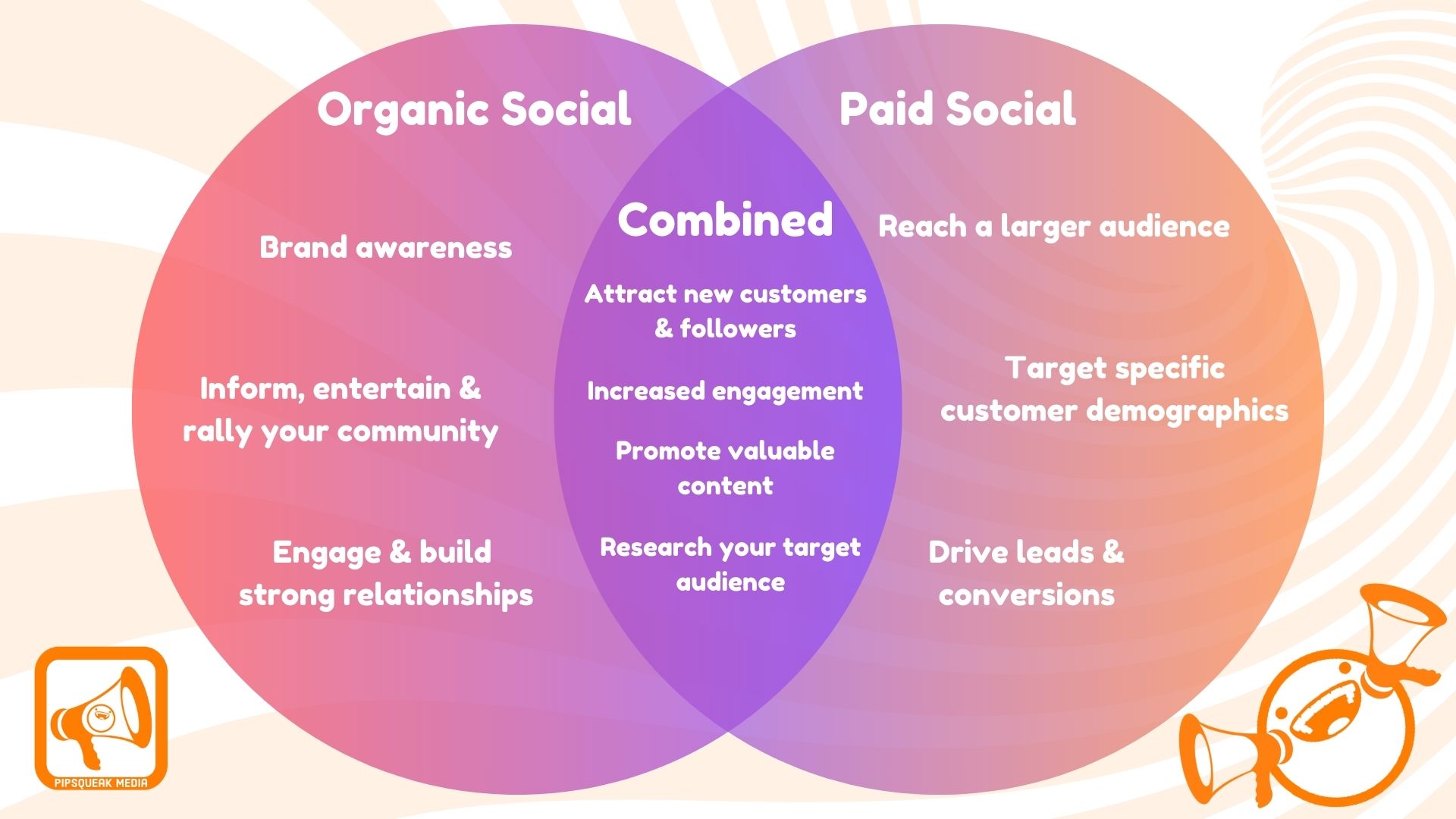
Organic Social Media Marketing nurtures positive brand perceptions and relationships, drawing consumers to buy your goods and services. It’s an unpaid strategy involving publishing posts, photos, videos, memes and stories directly on your social media profile. So for your messages are to reach new audiences, your content must lend itself to being shared.
As such, organic social focuses on forming authentic connections and experiences between businesses and their audience whilst also being entertaining. Considering what counts as entertainment, social media users can be divided into six populations.
- Fun
- Facts
- Feelings
- Values
- Imagination
- Action
When your followers access social media, your goal is for your content to land in their feed and get shared. Another key to making organic social media effective is selecting the right hashtags and location tags. Encouraging replies from social media users is also important because their followers will also get notified. As such, organic social media appeals to a company’s existing following, mutual followers, and any interested third parties.
What Is Paid Social Media?
Paid Social Media Marketing focuses on paid advertising. This strategy involves brands bidding and paying social media platforms to promote content to new social media users. It means competing against other companies to have your ads placed directly in front of your target audience. And whilst organic social provides valuable data, paid social offers greater consumer insights for enhancing your campaign. As such, paid social advertising can be an excellent way of reaching new audiences quickly and converting interest into sales.
Social Media platforms are constantly collect information about users. Information that includes demographic and psychographic data like interests, hobbies, location, age, gender, etc. And by having access to this data, you’ll gain a stronger understanding of your ideal audience. So in the pursuit of driving sales, you can target individuals who are interested and more likely to buy.
What’s Better: Organic or Paid?
Whether or not you’re new to social media marketing, you ideally want a combination of organic and paid. Both can play a vital role in enhancing the reach and effectiveness of your messaging strategy. So it really depends on your goals and how well you can keep messaging synergy.
Organic social can cultivate your brand’s online presence, increasing follower engagement and repeat purchases. And by using select hashtags and encouraging your existing followers to share your content, you can still extend your reach. Meanwhile, you can create paid social media adverts with the intention of drawing new followers and driving sales.
So in short, whilst organic excites your existing followers, paid attracts new followers who are interested and likely to buy.
If you want to explore the exciting potential of combining paid and organic social media strategies, contact Pipsqueak Media today! We’re eager to support you in achieving success online!


Podcasting vs Blogging: Which Boosts Your Business?
Podcasting and blogging are both effective communication tools, each with unique advantages. Podcasts foster a personal connection through audio and…
Keep reading
Empowering Single Parents: A Journey with My Thriving Child
Hannah Strong, a divorce therapist and founder of My Thriving Child, faced challenges in connecting with her audience of single…
Keep reading
Boost Your Business with Social Media Marketing
Social Media Marketing is a branch of Digital Marketing, connecting your business with a global community of social media users.…
Keep reading
 PIPSQUEAK MEDIA
Leave a comment