
Sometimes, when marketing goes wrong, it goes spectacularly wrong.
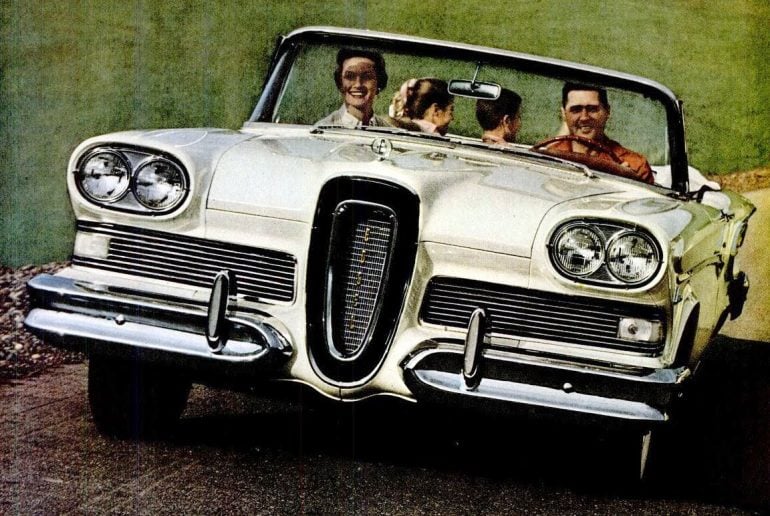
When considering the automobile manufacturer Ford, customers generally recognise the brand and its vehicles as being reputable and dependable, particularly their Sedans and sports cars. However, a significant aspect of their triumph in the market can be attributed to their ability to learn from previous errors. And one mistake famous among automobile manufacturers is the 1957 Ford Edsel.
The Titanic of automobiles
There are a number of reasons why the Ford Edsel and its namesake division was made. One is that it was meant to honour Henry Ford’s son, Edsel. The model was also intended to coincide with rebounding faith in the U.S. economy and changing trends in the automobile industry. Whereby the industry was transitioning from a postwar seller’s market to a buyer lead market.
So, whilst Henry Ford was content with producing the most popular vehicles in the automobile industry, Edsel wanted to go further. From his perspective and understanding, Edsel wanted to produce the best car in the world. Despite rigorous market research and the faith placed in the model, the Edsel fell flat on arrival. By the time the Edsel was launched much of the research had become outdated. Yet the crux of the issue is that this was a model the Ford company wanted to produce, but which did not align with what customers expected from a new car.
When Marketing goes wrong
Before the Edsel was released to the market, Ford decided to fuel public interest and for months created significant hype around its unveiling, with advertising featuring the slogan ‘The Edsel is Coming.’ Before the vehicle was even stocked, dealerships were instructed not to reveal the Edsel before its official launch, or risk a significant fine and the termination of their franchise.
Using the strong relations Ford had with the media and connections held by their PR director, C Gayle Warnock, the Edsel was featured in Time and Life magazines. Articles often promoted exaggerated claims about the model and its specifications. On 13 October 1957, Ford collaborated with the CBS television network, broadcasting a one-hour special called The Edsel Show.
However, despite the attention and buzz it was receiving, the Edsel was poorly received upon its launch. Ford had over-promised so much to the public but failed to deliver. In the first year of its launch, Ford sold 64,000 units. A far cry from the anticipated 200,000 units which would’ve made up 5% of the car market.
Unpopular name
As part of their marketing research, the Ford company spent a significant amount of time attempting to find an appealing name for the new model. Teams in New York, Chicago and Michigan asked members of the public for their opinion of certain names and to come up with their own names.
Ford even went so far as to reach out to the poet Marianne Moore, asking her to propose a name that signified feelings of visceral elegance, fleetness, advanced features and design. Her suggestions included Mongoose Civique, Resilient Bullet, Utopian Turtletop, and Varsity Stroke. However, their efforts amassed tens of thousands of suggestions, too many for them to process.
However, in a November 1956 Ford executive committee, Ernest Breech suggested calling the new model ‘Edsel’. After all, it was the name of the founder’s only son. But this did not sit well with Warnock. Edsel was one of the names tested with the public and scored very poorly. Participants associated the name with ‘Weasel’ and ‘Pretzel’. So when the name Edsel was approved, Warnock in frustration declared that “We have just lost 200,000 sales.”
Ugly design
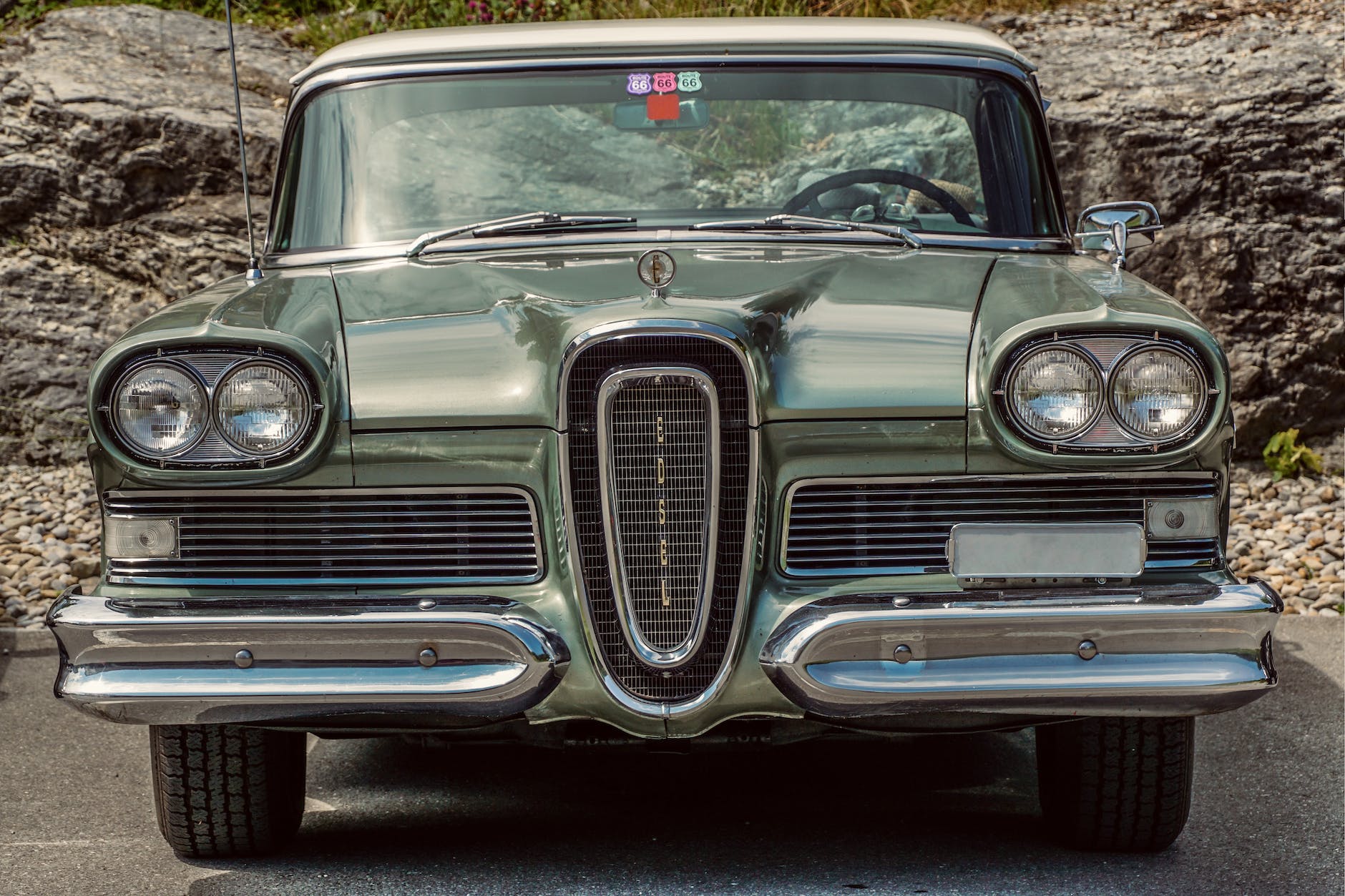
Ford’s poor choice of name wasn’t the only issue plaguing the new model. Customers also hated the design and considered the Edsel ugly. As well as being finless, which was expected from a new revolutionary vehicle, customers also loathed the car’s front-end bonnet and grille. In fact, one reviewer described the Edsel as looking like “an Oldsmobile sucking a lemon.” Another referred to the front-end grille as looking akin to a toilet seat. So, considering when marketing goes wrong, it just goes to show how important design is for satisfying consumer needs and wants.
Too expensive
On the day of the model’s launch – E Day – Ford premiered 18 variations of the model. These ranged from the $2,700 pacer class to the $3,700 Citation. During the design stage, Ford decided to fit the model with a powerful engine amidst a period where car buyers were favouring smaller fuel-efficient vehicles.
As such, another issue consumers had with the Edsel was the price and hefty cost of maintaining the vehicle. The Edsel frequently suffered from quality control issues. Parts did not fit or were missing, whilst many dealerships were ill-equipped to rectify these issues or replace missing parts and accessories. Cables and components near the exhaust also tended to corrode and leak. Consequently, the Edsel quickly acquired a reputation where it was widely referred to as ‘Every Day Something Else Leaks.’
Bad timing
The launch date for the unveiling of the Ford Edsel proved to be another ill-conceived factor. In the 1950s USA, new automobiles typically arrived in November of each year. However, the Ford Edsel entered the market in September, putting it in direct competition with the discounted 1957 vehicles sold in anticipation of November. Consequently, potential car buyers had more time to acquaint themselves with the Edsel while also waiting to see what November had to offer. Thus, in conjunction with the tarnished reputation it was acquiring, Ford had essentially established conditions that guaranteed failure.
Lessons from the Ford Edsel
The failure of the Ford Edsel teaches marketers, especially the automobile industry, a number of crucial lessons. The Ford Edsel is perhaps best described by Lee Iacocca as “a car in search of a market it never found.” In spite of the market research Ford has conducted, market conditions had changed. It used to be that automobile manufacturers would build a car and then find a market, but by the time the Edsel went to market this dynamic had reversed.
Now it is crucial to gauge consumer needs, wants, and desires before developing a product or service. Therefore, it’s not just about what you want to produce, but what consumers feel adds value to their lives.
The Edsel is also a warning about over-marketing and over-promising. If you’re presenting a product as being a game changer and offering an array of unique features that’ll enrich the lives of consumers, it needs to do exactly that. Anything short of that will leave customers disappointed. So, to an extent, it’s better to underpromise and over perform than to promise more than what’s deliverable.
Need help planning your marketing?
When marketing goes wrong the impact it can have on your brand can be devastating. This is why planning out your marketing campaign and understanding how your goods and services satisfy consumer needs is so crucial. If you’re looking to acquire support in organising a marketing campaign and commissioning engaging content, give Pipsqueak Media a shout.

 PIPSQUEAK MEDIA
Leave a comment